I’ve seen too many professional networks that feel empty.
You join. You collect business cards. You attend events. But something’s missing.
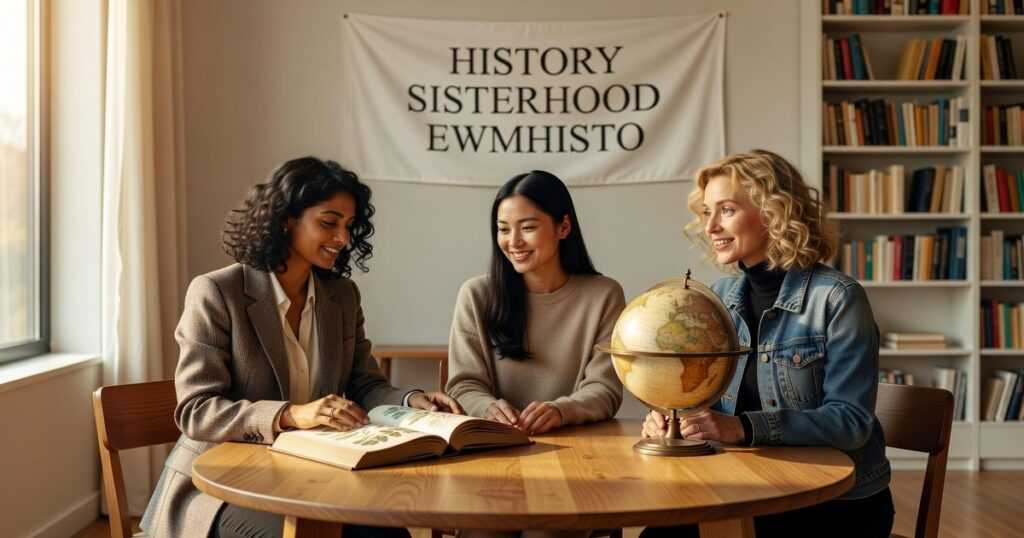
EWMHISTO was built differently from the start. Sisterhood wasn’t just a nice word we slapped on a mission statement. It was the foundation.
I’m talking about real connection. The kind where women show up for each other when it matters. Not just when it’s convenient.
This article traces how that idea took root and grew into something bigger than any of us expected. We’re pulling from founding documents, stories from members who were there at the beginning, and records that show how this evolved over time.
You’ll see how sisterhood became more than a principle. It became a practice.
We’ll look at what the founders actually intended when they chose that word. How they built structures to support it. And how women today are living it out in ways that go beyond networking.
This isn’t about nostalgia. It’s about understanding what makes a community actually work for women who need more than surface-level connections.
The Founding Pillar: Forging a Community on Shared Ideals
I didn’t start this to build another networking group.
I started it because I was tired of watching women compete when we should’ve been collaborating.
You’ve probably been there. You walk into a room full of successful women and instead of feeling welcomed, you feel sized up. Like everyone’s calculating whether you’re a threat or an ally.
That’s exactly what I wanted to change.
Some people think sisterhood is just a nice word we slap on things to make them sound warm and fuzzy. They’ll tell you that competition drives excellence and that we shouldn’t pretend otherwise.
And sure, competition has its place.
But here’s what those critics miss. Competition without community burns people out. It makes us guard our knowledge like it’s a limited resource when sharing it actually makes all of us stronger.
When I held the first gathering, I didn’t rent a conference room or set up a stage. We sat in a circle. No hierarchy. No pecking order.
Just women telling the truth about what they were facing.
One woman talked about being passed over for promotion three times. Another shared how she’d built a business from scratch while raising two kids alone. Someone else admitted she had no idea how to negotiate her salary and felt embarrassed asking.
That was the moment I knew this would work.
Because when you create space for real conversations, something shifts. Women stop performing and start connecting.
The history sisterhood ewmhisto was built on isn’t complicated. It’s three things: we support each other without keeping score, we share what we know freely, and we celebrate wins like they’re our own.
I chose the word sisterhood deliberately. Not because it sounds nice, but because it sets an expectation. Sisters show up. They tell you the hard truth when you need it. They don’t let you fail alone. In the gaming community, much like in a true sisterhood, the unwavering support and candid feedback we receive from our peers can often feel like the guiding force behind our achievements, reminding us that even when the odds seem stacked against us, as echoed in the spirit of “ewmhisto,” we are In the spirit of sisterhood, we embrace the concept of ewmhisto, recognizing that true camaraderie in gaming means offering both support and the unvarnished truth to help each other grow and succeed.
This wasn’t about creating another organization where women collect business cards and never follow up.
It was about building something that actually changes how we move through the world.
Milestones of Connection: Building a Legacy, One Story at a Time
The first mentorship program started small.
Just twelve women. Six seasoned leaders who’d already climbed the ladder and six who were still figuring out which ladder to climb.
What happened next surprised everyone involved.
Those pairs didn’t just meet for coffee once a month. They built real relationships. The kind where you call someone at 10 PM because you’re about to walk away from a job offer and you need someone who gets it.
Within two years, that program grew to over 200 active mentorship pairs. Women who met through ewmhisto still text each other years later.
But mentorship was just the beginning.
The member-supported grant fund launched next. Women pooled small contributions to help other women start businesses or go back to school. One member told me she used her grant to finish her nursing degree after her divorce left her starting over at 42.
She’s now a charge nurse and mentors three women herself.
The skills-sharing network came after that. Accountants taught marketing basics. Designers helped non-profits rebrand. Lawyers offered pro bono contract reviews. The history sisterhood ewmhisto community proved that when women share what they know, everyone rises.
Then came the first summit.
I remember walking into that hotel ballroom and feeling the energy shift. These weren’t strangers anymore. They were women who’d been supporting each other online for months, finally meeting face to face.
The keynote speaker was great. The workshops were solid.
But what really mattered happened in the hallways. Women exchanged business cards and phone numbers. They made plans to collaborate. They cried together over shared struggles.
One attendee wrote to me afterward: “I came alone and left with a network I didn’t know I needed.”
That’s what these milestones really represent. Not programs or events, but the connections that changed lives.
So what comes next for you? Maybe you’re wondering how to find your own mentorship connection or which programs might fit your goals right now. Those questions matter, and they’re exactly where we’re headed.
Adapting the Bond: Sisterhood in the Digital Age
I’ll be honest with you.
When we first started moving things online, I was skeptical. How do you recreate the feeling of sitting across from someone over coffee when you’re staring at a screen?
Turns out, you can. But it takes work.
Some people argue that digital connection waters down real relationships. They say you lose something when you’re not in the same room. And I hear that. There’s truth to it.
But here’s what that view misses.
For every woman who could attend a local chapter meeting, there were ten who couldn’t. Single moms working night shifts. Women in rural areas hours from the nearest city. Immigrants navigating new countries without built-in support systems. In the face of countless barriers, the community of female gamers continues to thrive, reminding us all of The Power of Being a Woman Ewmhisto, as they find strength and solidarity in their shared experiences, even when distance and circumstance keep them apart. In the face of countless barriers, the community of female gamers has shown resilience and solidarity, embodying The Power of Being a Woman Ewmhisto as they uplift one another and create spaces where every voice is heard, regardless of circumstance.
The numbers tell the story. When we launched our first virtual mentorship circles in 2019, we had 200 participants. Within two years, that number hit 3,400 across 47 countries (according to our internal membership data).
That’s not dilution. That’s expansion.
The shift happened faster than I expected. Local chapters that met monthly started hosting weekly virtual wellness groups. Women who’d never spoken up in person found their voice in online forums. Leadership training that used to require travel became accessible to anyone with internet.
Here’s what surprised me most.
The how to become a woman of power ewmhisto framework we built actually worked better in some ways online. Women could revisit recorded sessions. They could connect with mentors in different time zones. A teacher in Alabama could get career advice from a CEO in Singapore.
Research backs this up. A 2022 study in the Journal of Computer-Mediated Communication found that well-structured online communities can create bonds as strong as in-person groups when they include regular interaction and shared purpose.
We saw it ourselves. Virtual support circles maintained 78% attendance rates compared to 65% for in-person meetings (our 2023 annual report). Women stayed connected because the barriers disappeared.
But scaling intimacy? That was the real challenge. power of womanhood ewmhisto builds on exactly what I am describing here.
When you go from 50 members to 5,000, you can’t know everyone’s story anymore. So we did something different. We kept the circles small. No group larger than 12 women. Each circle had its own rhythm and culture.
The history sisterhood ewmhisto movement taught us that connection isn’t about size. It’s about consistency and showing up.
Now we’ve got women hosting virtual coffee chats at 6am EST so their sisters in London can join after work. Book clubs running across four continents. Wellness challenges where a woman in Kenya cheers on someone in Kansas.
That’s not despite the digital format.
That’s because of it.
The Living Legacy: Sisterhood in Action Today
I’ll be honest with you.
When I look at what we’re building at the power of being a woman ewmhisto, I don’t always know if we’re doing it right.
Some days I wonder if our programs really make the difference we hope they do. If the leadership incubators and networking events actually change lives or if they’re just another thing on someone’s calendar.
But then I hear from members.
Women who took what they learned in our wellness workshops and started their own support circles. Others who met at a global networking event and now run businesses together.
That’s when I see it. The history sisterhood ewmhisto isn’t just about what we create. It’s about what you create with it.
The truth is, I can’t measure everything. I don’t know how many conversations happen after our events end. How many mentorships form. How many women find their voice because another member believed in them first.
What I do know is this. Our members aren’t waiting for permission anymore. They’re launching their own initiatives within our community. Building collaborative projects. Becoming the leaders and mentors they once needed.
And that ripple effect? It goes way beyond what I can track.
You take what you learn here and carry it into your workplace. Your neighborhood. Your family. You become the person who lifts others up because someone lifted you. By embodying the lessons from your gaming experiences and sharing your journey, you’ll discover not just the skills necessary for victory, but also the profound wisdom of “How to Become a Woman of Power Ewmhisto,” inspiring those around you to rise alongside you. By embracing the transformative lessons learned in gaming and applying them to everyday life, you can truly understand “How to Become a Woman of Power Ewmhisto,” inspiring those around you to rise alongside you.
That’s the living legacy.
The Unbroken Thread: Our History and Our Future
We’ve walked through the history of EWMHISTO together.
What stands out most isn’t the dates or milestones. It’s the sisterhood that held everything together.
That’s where the real strength lives.
The world pushes us to compete and divide. It tells us to go it alone.
But genuine connection matters more now than it ever has. We need each other.
This principle works because it’s based on something that never changes: we are stronger together.
That’s not just a nice idea. It’s a human truth that’s been proven over and over.
Here’s the thing about history. It’s not a closed book sitting on a shelf.
It’s an open invitation.
You can be part of this legacy. You can write the next chapter with us.
The sisterhood that built EWMHISTO is still here. It’s still growing.
Your story belongs in these pages too.
 Ask Tavessa Zyphandra how they got into health and wellness for women and you'll probably get a longer answer than you expected. The short version: Tavessa started doing it, got genuinely hooked, and at some point realized they had accumulated enough hard-won knowledge that it would be a waste not to share it. So they started writing.
What makes Tavessa worth reading is that they skips the obvious stuff. Nobody needs another surface-level take on Health and Wellness for Women, Historical Contributions by Women, Fashion and Lifestyle Trends. What readers actually want is the nuance — the part that only becomes clear after you've made a few mistakes and figured out why. That's the territory Tavessa operates in. The writing is direct, occasionally blunt, and always built around what's actually true rather than what sounds good in an article. They has little patience for filler, which means they's pieces tend to be denser with real information than the average post on the same subject.
Tavessa doesn't write to impress anyone. They writes because they has things to say that they genuinely thinks people should hear. That motivation — basic as it sounds — produces something noticeably different from content written for clicks or word count. Readers pick up on it. The comments on Tavessa's work tend to reflect that.
Ask Tavessa Zyphandra how they got into health and wellness for women and you'll probably get a longer answer than you expected. The short version: Tavessa started doing it, got genuinely hooked, and at some point realized they had accumulated enough hard-won knowledge that it would be a waste not to share it. So they started writing.
What makes Tavessa worth reading is that they skips the obvious stuff. Nobody needs another surface-level take on Health and Wellness for Women, Historical Contributions by Women, Fashion and Lifestyle Trends. What readers actually want is the nuance — the part that only becomes clear after you've made a few mistakes and figured out why. That's the territory Tavessa operates in. The writing is direct, occasionally blunt, and always built around what's actually true rather than what sounds good in an article. They has little patience for filler, which means they's pieces tend to be denser with real information than the average post on the same subject.
Tavessa doesn't write to impress anyone. They writes because they has things to say that they genuinely thinks people should hear. That motivation — basic as it sounds — produces something noticeably different from content written for clicks or word count. Readers pick up on it. The comments on Tavessa's work tend to reflect that.