I’ve read enough history books to know something’s missing.
You probably noticed it too. The stories we learned in school had huge gaps. Women who changed the world got a footnote if they were lucky.
Here’s what bothers me: we’re walking around with half the story. Maybe less than half.
I started digging into what actually happened. Not the sanitized version. The real accounts of women who built movements, made discoveries, and shaped the world we live in now.
This article pulls back the curtain on achievements that should’ve been front and center all along. I’m talking about scientists, artists, political leaders, and revolutionaries who got written out or pushed to the margins.
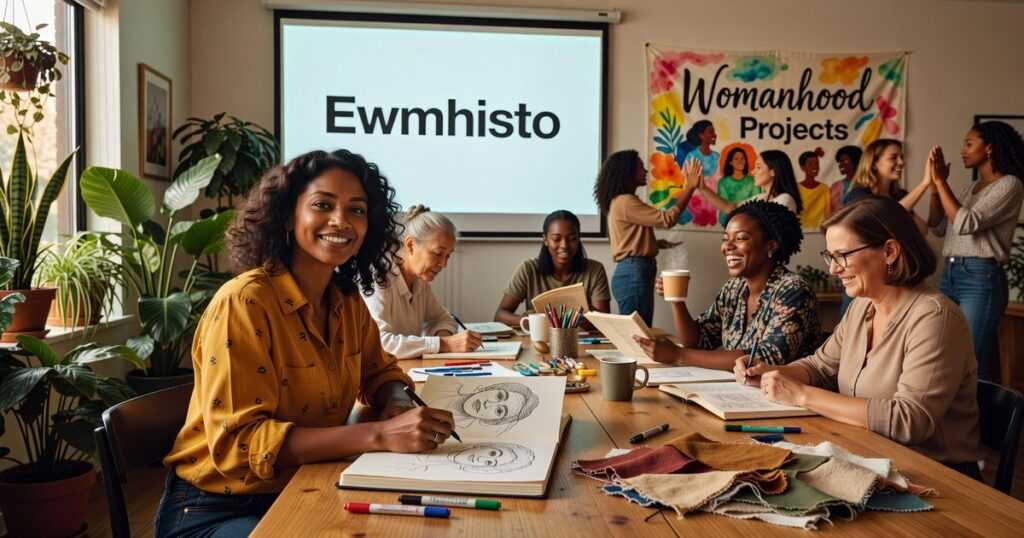
EWMHisto exists because accurate history matters. We do the research. We find the primary sources. We tell the stories that got buried or ignored.
You’ll read about women who did things people said were impossible. Some of these names you might recognize. Others you’ve probably never heard of, and that’s exactly the problem we’re fixing.
No fluff or inspiration porn. Just facts about what these women actually did and why it mattered.
This is the history you should’ve learned the first time around.
Beyond the Footnotes: Why Recognizing Women’s History Matters Today
You know how history class felt, right?
A parade of men making decisions while women just sort of existed in the background.
That incomplete picture does real damage. When girls grow up never seeing themselves in the stories of progress, they start to believe they don’t belong there. (I’ve watched this happen with my own nieces.)
But here’s what changes when we correct the record.
Women and girls start to see themselves differently. They realize innovation and leadership aren’t male traits. They’re human traits that women have been demonstrating for centuries.
Think about it this way. If you never knew about women like Rosalind Franklin or Katherine Johnson, you’d assume science and math were men’s domains. That’s not just wrong. It’s limiting for everyone.
Learning about past female leaders gives us something concrete to point to. Real examples beat abstract encouragement every single time.
Now, some people say we should just focus on the future and stop dwelling on the past. They think highlighting historical women is divisive or unnecessary.
I disagree.
You can’t understand where we’re going if you don’t know where we’ve been. History isn’t complete when half the population gets footnoted or erased entirely.
At womanhood projects ewmhisto, we dig into these stories because progress wasn’t built by half the population. Women were there, driving change and innovation right alongside men. At womanhood projects ewmhisto, we explore the powerful narratives of women who have historically shaped our world, proving that progress is a shared journey rather than a solitary path. At womanhood projects ewmhisto, we uncover the remarkable contributions of women throughout history, illustrating how their resilience and creativity have been instrumental in shaping our modern world.
When we acknowledge that? We get a fuller, more accurate picture of how societies actually advance.
Pioneers in the Lab and Clinic: Women Who Shaped Science and Medicine
You’ve probably heard of Marie Curie.
But do you know what she actually had to go through to do her work?
Most people don’t realize that she attended lectures standing in doorways because women weren’t allowed to sit in classrooms. She won two Nobel Prizes in different sciences while universities refused to give her a proper lab.
Marie Curie discovered radium and polonium. Her research on radioactivity (a term she coined herself) laid the groundwork for cancer treatment. Every radiation therapy session today traces back to her work in a makeshift shed in Paris.
Then there’s Rosalind Franklin.
She took Photo 51. That’s the X-ray image that revealed DNA’s double helix structure. Her male colleagues used her data without credit and collected a Nobel Prize for it. She died before the scientific community acknowledged what she’d done.
But here’s what matters now. Her crystallography techniques? We use them to study viruses and develop vaccines. COVID-19 research relied on methods she pioneered.
Dr. Patricia Bath faced a different fight.
She was the first African American woman to complete a residency in ophthalmology. Hospitals tried to block her at every turn. She invented the Laserphaco Probe in 1986, which uses lasers to remove cataracts. Millions of people can see today because she refused to quit.
The womanhood projects ewmhisto covers show us something important. These women didn’t just make discoveries. They changed how we approach problems.
Want to apply their example? Start documenting your work meticulously like Franklin did. Push past closed doors like Curie. Create solutions for underserved communities like Bath.
Their legacy isn’t just in textbooks. It’s in every lab where a woman works without question today.
Shattering Canvases and Stages: Women’s Impact on Arts and Culture
For centuries, women created art in the shadows.
They painted. They wrote. They composed music that moved entire generations.
But history books? They mostly remembered the men.
Some people argue that women simply weren’t as talented or didn’t produce work at the same level. They point to the lack of recognition as proof that male artists were just better.
Here’s what that argument ignores.
Women weren’t given the same access to training, materials, or exhibition spaces. They were actively kept out of art academies and professional circles (some institutions didn’t admit women until the 1900s).
From Subject to Author
Take Artemisia Gentileschi. She painted in the 1600s with a technical skill that matched Caravaggio. Her work depicted biblical women as strong and complex, not just beautiful objects to admire.
But for hundreds of years, critics either ignored her or attributed her paintings to her father.
Frida Kahlo faced similar erasure. People knew her as Diego Rivera’s wife before they recognized her as a painter who redefined self-portraiture. She turned personal pain into visual statements about identity, disability, and what it meant to be a woman in Mexico. In much the same way that Frida Kahlo’s profound artistry was often overshadowed by her identity as Diego Rivera’s wife, the gaming community is beginning to recognize the significant contributions of creators like Ewmhisto, who transform personal narratives into impactful experiences that challenge our understanding of identity and representation in In a striking parallel to Frida Kahlo’s journey of self-discovery and artistic expression, Ewmhisto emerges as a modern metaphor for the often-overlooked narratives in gaming, highlighting how personal stories can reshape our understanding of identity and resilience within the digital landscape.
Zora Neale Hurston documented Black Southern culture through fiction and anthropology. Her novel “Their Eyes Were Watching God” gave voice to Black women’s interior lives in ways literature hadn’t seen before. Yet she died in poverty and was largely forgotten until Alice Walker found her unmarked grave in 1973.
These women didn’t just make pretty things. They changed what art could say and who got to say it.
The shift from muse to creator matters because it’s about control. When you’re the subject, someone else decides how you’re seen. When you’re the creator, you tell your own story. I walk through this step by step in empowerment sisterhood ewmhisto.
That’s what womanhood history ewmhisto explores through womanhood projects ewmhisto. The moments when women stopped waiting for permission and started making work that couldn’t be ignored.
From Suffrage to the Senate: Architects of Political and Social Change
You want to know what makes a powerful woman ewmhisto?
Look at the ones who refused to stay quiet.
Sojourner Truth stood in front of a room full of men in 1851 and asked a question that still echoes. “Ain’t I a woman?” She didn’t ask permission to speak. She just spoke.
That’s where real change starts.
Susan B. Anthony knew this too. When she was arrested for voting in 1872, the judge told her she couldn’t speak at her own trial. She spoke anyway. “You have trampled underfoot every vital principle of our government,” she told him. “My natural rights, my civil rights, my political rights are all alike ignored.”
They fined her $100. She never paid it.
Some people say these women were just products of their time. That we’ve moved past needing that kind of fight. But here’s what they’re missing.
The fight never stopped. It just changed shape.
Dolores Huerta co-founded the United Farm Workers and coined a phrase you’ve probably heard: “Sí, se puede.” Yes, we can. She was organizing workers in the fields while raising eleven kids. When people told her to choose between activism and motherhood, she did both.
That’s the thing about womanhood projects ewmhisto celebrates. They don’t fit into neat boxes.
Barbara Jordan became the first Black woman from the South elected to Congress in 1972. During the Watergate hearings, she said something I still think about. “My faith in the Constitution is whole, it is complete, it is total.” She wasn’t just making a speech. She was reminding everyone that the rules apply to presidents too.
But here’s what most people forget.
You don’t need a Senate seat to change things. Ella Baker spent decades organizing in communities across the South. She trained the people who became civil rights leaders. “Strong people don’t need strong leaders,” she said. In exploring the profound impact of grassroots activism on societal change, one cannot overlook the significance of figures like Ella Baker, whose legacy resonates with the ideals of empowerment and community, reflecting the principles of Womanhood History Ewmhisto that celebrate the strength found in collective action rather than reliance on singular leadership. In the realm of grassroots activism, the legacy of Ella Baker serves as a powerful reminder that the stories woven into Womanhood History Ewmhisto reveal how collective strength can ignite transformative change without the need for formal power.
She meant it.
The Ongoing Story of Achievement
You came here to understand the real scope of what women have accomplished throughout history.
Now you see it. The contributions span every field you can imagine.
The real tragedy isn’t that women haven’t achieved enough. It’s that we haven’t recognized what was always there.
When we actively seek out these stories and share them, something shifts. The historical record becomes more accurate. The narrative becomes more complete. And everyone benefits from seeing the full picture.
I want you to do something today.
Pick one story from this article that stuck with you. Maybe it surprised you or maybe it confirmed something you suspected. Share it with someone else.
That’s how we change things. One story at a time.
womanhood projects ewmhisto exists because these stories matter. They’ve always mattered. We’re just making sure they get heard.
The women who came before us didn’t wait for permission to make their mark. Neither should we when it comes to telling their stories.
 Ask Tavessa Zyphandra how they got into health and wellness for women and you'll probably get a longer answer than you expected. The short version: Tavessa started doing it, got genuinely hooked, and at some point realized they had accumulated enough hard-won knowledge that it would be a waste not to share it. So they started writing.
What makes Tavessa worth reading is that they skips the obvious stuff. Nobody needs another surface-level take on Health and Wellness for Women, Historical Contributions by Women, Fashion and Lifestyle Trends. What readers actually want is the nuance — the part that only becomes clear after you've made a few mistakes and figured out why. That's the territory Tavessa operates in. The writing is direct, occasionally blunt, and always built around what's actually true rather than what sounds good in an article. They has little patience for filler, which means they's pieces tend to be denser with real information than the average post on the same subject.
Tavessa doesn't write to impress anyone. They writes because they has things to say that they genuinely thinks people should hear. That motivation — basic as it sounds — produces something noticeably different from content written for clicks or word count. Readers pick up on it. The comments on Tavessa's work tend to reflect that.
Ask Tavessa Zyphandra how they got into health and wellness for women and you'll probably get a longer answer than you expected. The short version: Tavessa started doing it, got genuinely hooked, and at some point realized they had accumulated enough hard-won knowledge that it would be a waste not to share it. So they started writing.
What makes Tavessa worth reading is that they skips the obvious stuff. Nobody needs another surface-level take on Health and Wellness for Women, Historical Contributions by Women, Fashion and Lifestyle Trends. What readers actually want is the nuance — the part that only becomes clear after you've made a few mistakes and figured out why. That's the territory Tavessa operates in. The writing is direct, occasionally blunt, and always built around what's actually true rather than what sounds good in an article. They has little patience for filler, which means they's pieces tend to be denser with real information than the average post on the same subject.
Tavessa doesn't write to impress anyone. They writes because they has things to say that they genuinely thinks people should hear. That motivation — basic as it sounds — produces something noticeably different from content written for clicks or word count. Readers pick up on it. The comments on Tavessa's work tend to reflect that.