
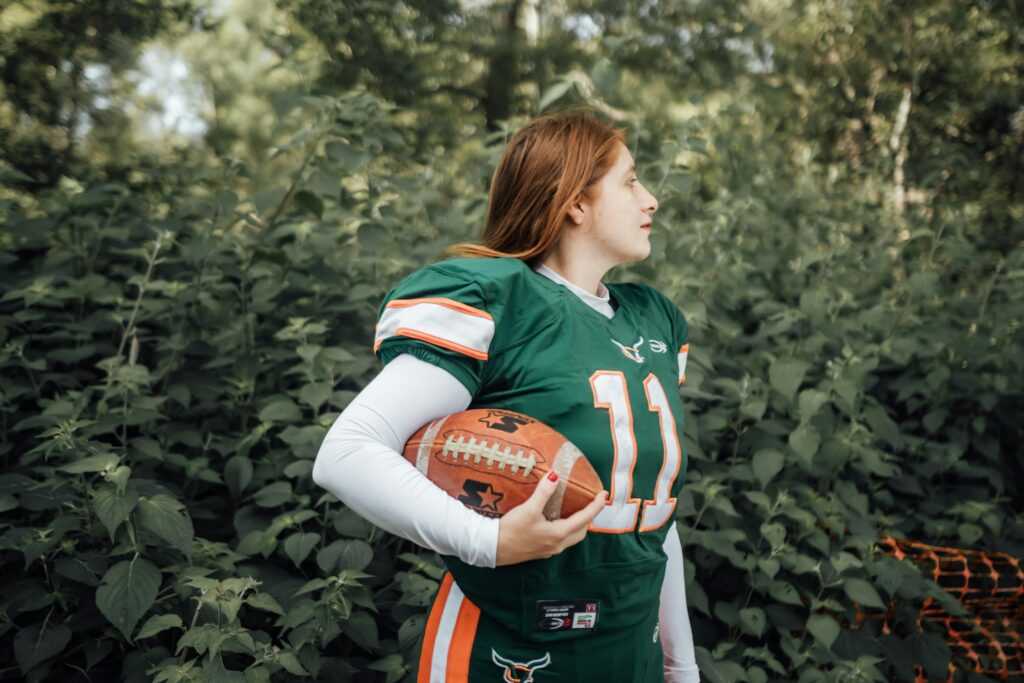
Women have played vital and often overlooked roles in shaping the NFL and the broader American football landscape. From ownership and executive leadership to journalism, officiating, and player advocacy, their influence has helped modernize the sport and expand its reach. While football was long viewed as a male-dominated industry, the contributions of women have proven essential to its growth, credibility, and commercial success.
Early Pioneers and Ownership Influence
One of the earliest and most impactful figures was Violet Bidwill Wolfner, owner of the Chicago Cardinals and later the St. Louis Cardinals from the 1940s through the 1960s. At a time when women owning professional sports franchises was nearly unheard of, Bidwill Wolfner played a central role in keeping the team financially stable and competitive. Her leadership helped set a precedent for female ownership in professional football.
Georgia Frontiere later followed a similar path as the owner of the Los Angeles and St. Louis Rams. She became one of the most visible women in NFL ownership during the 1990s and early 2000s. Under her leadership, the Rams won Super Bowl XXXIV in 2000, marking the first time a franchise owned by a woman captured a Super Bowl title. Frontiere’s business decisions demonstrated that women could lead NFL organizations at the highest level.
Executive Leadership and Front Office Roles
In recent decades, women have become increasingly influential in NFL front offices. Amy Trask stands out as a trailblazer, serving as CEO of the Oakland Raiders from 1997 to 2013. She was the first woman to hold such a high-ranking executive role in the NFL. Trask played a key role in major league decisions, labor negotiations, and franchise operations, earning respect across the league.
Katie Blackburn of the Cincinnati Bengals is another example of executive influence. As executive vice president, she has been deeply involved in contract negotiations, salary cap management, and league committees. Her work has helped shape modern roster construction and financial strategy across the NFL, areas often discussed by fans alongside topics like player performance, Super Bowl favourites, all on betting platforms such as DraftKings.
Media, Journalism, and Storytelling
Women have also transformed how football is covered and understood. Pioneering journalists like Lesley Visser broke barriers as one of the first women to cover the NFL full-time in the 1970s. Her reporting for major networks helped legitimize women in sports journalism and opened doors for future generations.
Today, analysts such as Mina Kimes and reporters like Kim Jones and Dianna Russini play major roles in shaping football narratives. Their insights on strategy, player development, and league trends influence fan conversations and deepen understanding of the game beyond the scoreboard.
Coaching, Officiating, and On-Field Progress
Another significant shift has come through coaching and officiating. In 2015, Sarah Thomas became the first full-time female NFL official. She later made history by officiating Super Bowl LV, marking a milestone moment for representation on the field. Her success demonstrated that officiating excellence is based on skill and preparation rather than gender.
Women have also entered coaching roles. Katie Sowers served as an offensive assistant with the San Francisco 49ers and became the first woman to coach in a Super Bowl. Lori Locust, a defensive quality control coach for the Tampa Bay Buccaneers, also coached in Super Bowl LV and earned a championship ring. These achievements have helped normalize women’s presence in football operations and player development.
Player Advocacy and League Development
Beyond the NFL itself, women have played crucial roles in expanding opportunities within American football. Leaders such as Callie Brownson, who worked in college football and later with the Cleveland Browns, have focused on player development and organizational culture. Their work bridges the gap between collegiate programs and the professional ranks.
Women have also been instrumental in growing flag football, which has expanded rapidly at the youth and high school levels and is now an Olympic sport. This growth has created more inclusive pathways into football and strengthened the overall talent pipeline.
Lasting Impact on the Game
The influence of women on the NFL and American football continues to grow. From ownership and executive offices to sidelines and broadcast booths, their contributions have reshaped how the league operates and how fans engage with the sport. These leaders have helped modernize the NFL, improve workplace culture, and broaden its audience.
As the league evolves, the role of women will only become more central. Their impact is no longer an exception but a fundamental part of football’s past, present, and future.
 Krystal Berardizon has opinions about fashion and lifestyle trends. Informed ones, backed by real experience — but opinions nonetheless, and they doesn't try to disguise them as neutral observation. They thinks a lot of what gets written about Fashion and Lifestyle Trends, Women's Empowerment News, Health and Wellness for Women is either too cautious to be useful or too confident to be credible, and they's work tends to sit deliberately in the space between those two failure modes.
Reading Krystal's pieces, you get the sense of someone who has thought about this stuff seriously and arrived at actual conclusions — not just collected a range of perspectives and declined to pick one. That can be uncomfortable when they lands on something you disagree with. It's also why the writing is worth engaging with. Krystal isn't interested in telling people what they want to hear. They is interested in telling them what they actually thinks, with enough reasoning behind it that you can push back if you want to. That kind of intellectual honesty is rarer than it should be.
What Krystal is best at is the moment when a familiar topic reveals something unexpected — when the conventional wisdom turns out to be slightly off, or when a small shift in framing changes everything. They finds those moments consistently, which is why they's work tends to generate real discussion rather than just passive agreement.
Krystal Berardizon has opinions about fashion and lifestyle trends. Informed ones, backed by real experience — but opinions nonetheless, and they doesn't try to disguise them as neutral observation. They thinks a lot of what gets written about Fashion and Lifestyle Trends, Women's Empowerment News, Health and Wellness for Women is either too cautious to be useful or too confident to be credible, and they's work tends to sit deliberately in the space between those two failure modes.
Reading Krystal's pieces, you get the sense of someone who has thought about this stuff seriously and arrived at actual conclusions — not just collected a range of perspectives and declined to pick one. That can be uncomfortable when they lands on something you disagree with. It's also why the writing is worth engaging with. Krystal isn't interested in telling people what they want to hear. They is interested in telling them what they actually thinks, with enough reasoning behind it that you can push back if you want to. That kind of intellectual honesty is rarer than it should be.
What Krystal is best at is the moment when a familiar topic reveals something unexpected — when the conventional wisdom turns out to be slightly off, or when a small shift in framing changes everything. They finds those moments consistently, which is why they's work tends to generate real discussion rather than just passive agreement.